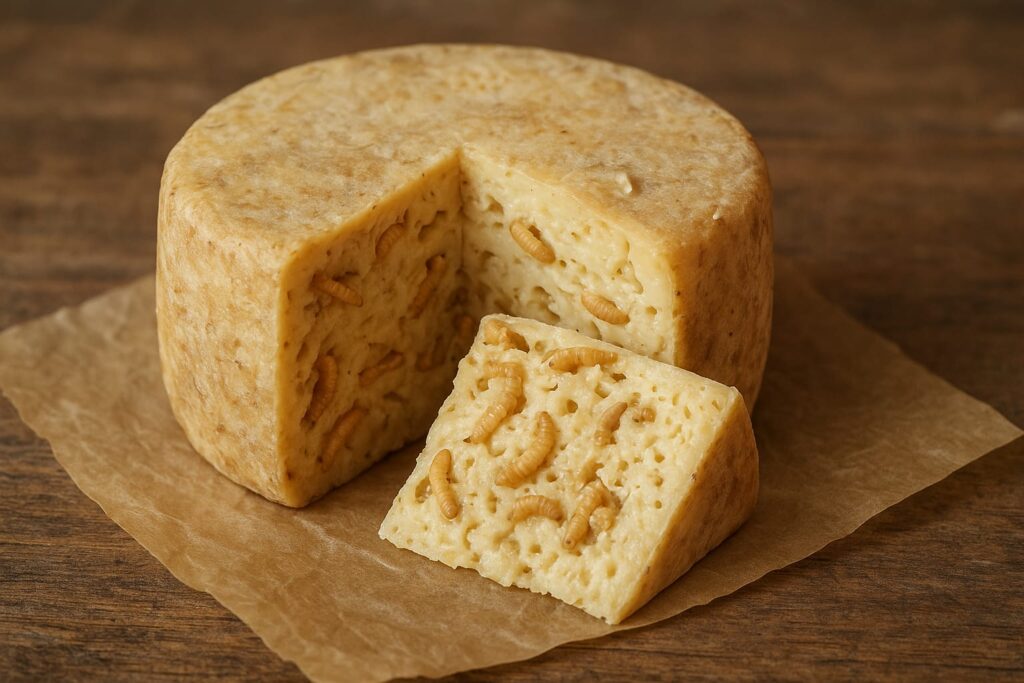



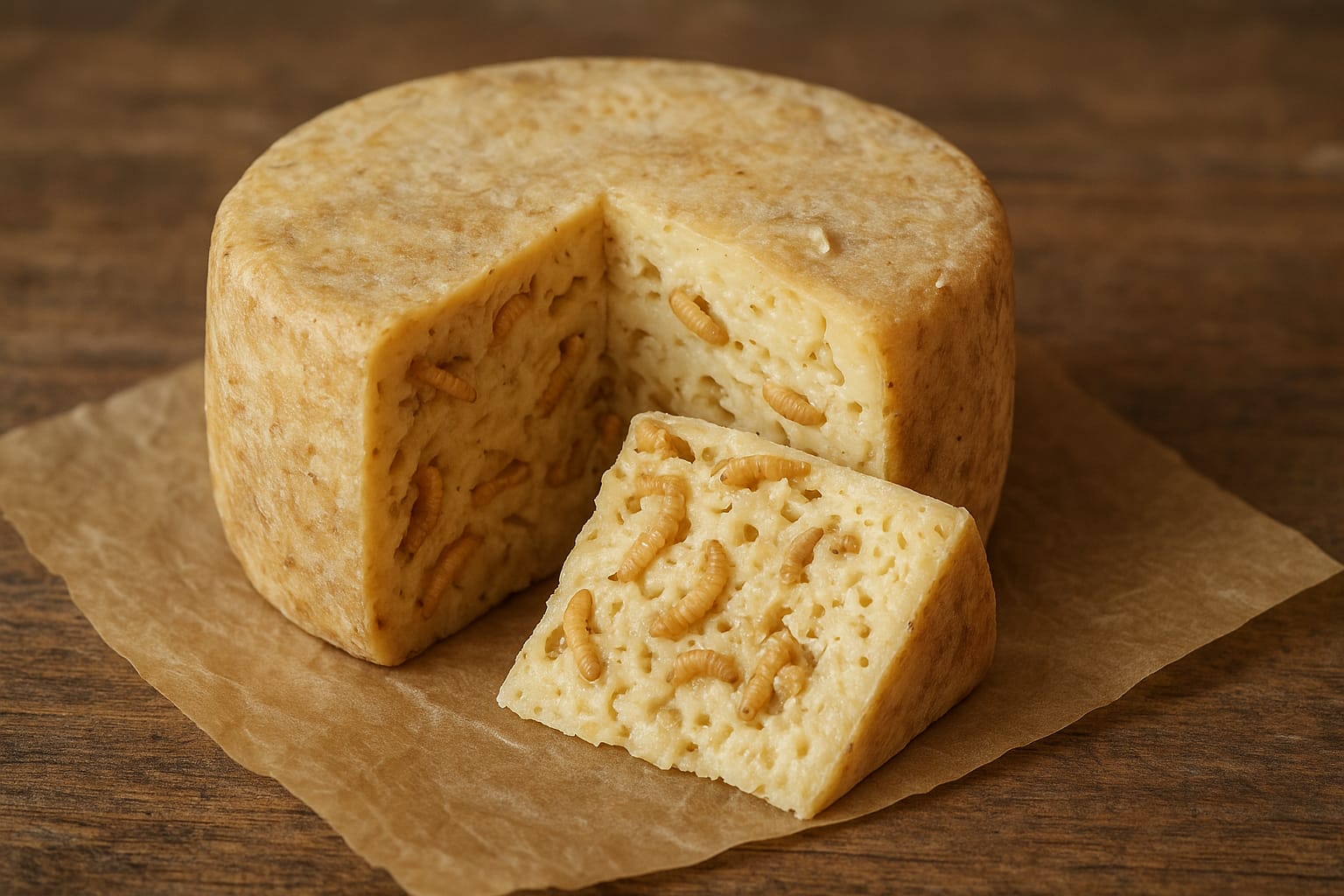
Casu Marzu – The Sardinian “Maggot Cheese”
Origin:
- Sardinia, an island in Italy.
- Traditionally made by shepherds from sheep’s milk.
What it is:
- A type of Pecorino cheese that has been intentionally infested with cheese fly larvae (maggots).
- The larvae digest the fats in the cheese, breaking it down and creating an extremely soft, almost liquid texture.
How it’s made:
- Pecorino cheese is left uncovered, allowing Piophila casei flies to lay eggs in it.
- Larvae hatch and begin fermenting the cheese from the inside.
- The cheese is eaten when the larvae are still alive, giving it a unique creamy texture.
Taste & Texture:
- Texture: Soft, creamy, sometimes runny; the larvae can move inside.
- Flavor: Very strong, pungent, tangy, and “ripe” compared to regular Pecorino.
- Aroma: Extremely intense; outsiders often find it overpowering.
Health & Safety:
- Illegal in the EU: Casu Marzu is banned in many countries because the larvae can survive in the human digestive tract, posing a potential health risk.
- Locally accepted: In Sardinia, it’s still consumed as a delicacy at festivals or special occasions.
How it’s eaten:
- Usually eaten with rustic bread and a strong local wine.
- Some people remove the larvae before eating, while others eat it whole, larvae included.
Fun Fact:
- The name “Casu Marzu” literally means “rotten cheese” in Sardinian dialect.
- Considered one of the world’s most extreme cheeses.